Archives August 2026

A Detailed Guide on Form 130 and What Changed for Salaried Employees

Every salaried employee looked forward to Form 16 at the beginning of the financial year for more than 60 years. It served as the foundation for each ITR file and verified the amount of tax that the employer had deducted and deposited. Form 130 will take its place under the Income Tax Act, 2025. Millions of salaried employees are affected by this change, so knowing when it applies and what it looks like may help avoid confusion when it does.

When Form 130 Is Really Important

It’s worth being precise here, since there’s often confusion about timing. Form 16 continues to apply for FY 2025-26, and employers must issue it by 15th June 2026, exactly as before. Form 130 comes into effect from Tax Year 2026-27, which runs from April 2026 to March 2027. The first Form 130 that employees receive will be issued by 15th June 2027, once this tax year closes. So salaried employees filing returns right now still work with Form 16, but TDS deducted from April 2026 onward is already being recorded under the new system that Form 130 will eventually reflect.

What Form 130 Looks Like

Form 130 is issued under Section 395(4)(b) of the Income Tax Act, 2025, and it serves the same core purpose as Form 16, certifying tax deducted from salary and deposited with the government. It also extends to pensioners and specified senior citizens who have authorised a bank to deduct tax on their interest income, a group Form 16 never fully covered.

Structurally, Form 130 has three parts instead of two:

  • Part A carries employer and employee details, along with the employment period, a field that wasn’t explicitly required before.
  • Part B summarises the income paid and TDS deducted, reconciled against the employer’s quarterly filings.
  • Part C contains detailed annexures, covering salary computation, or pension and interest income for senior citizens

Like its predecessor, Form 130 can only be generated through the TRACES portal, and only after the employer has filed the corresponding quarterly TDS return, now called Form 138, which replaces the earlier Form 24Q. Any version issued outside TRACES isn’t considered valid.

What Employees Should Watch For

Even though Form 130 won’t arrive until mid-2027, a few practical points are worth keeping in mind as this transition unfolds:

  • Confirm your employer is filing Form 138 correctly each quarter, since Form 130 depends entirely on this filing being accurate
  • Watch for the new employment period field in Part A, especially if you changed jobs during the year
  • Once issued, cross-check the TDS figures in Form 130 against Form 168, the new version of Form 26AS, sometimes called the Tax Passbook
  • Any mismatch between the two documents should be resolved with the employer before filing the ITR, not after

Since the certificate is generated only after quarterly filings are processed, delays on the employer’s side can push back when you actually receive it, so it helps to raise queries early if your payroll team seems behind schedule.

Conclusion

Salaried employees still have one more filing season with the well-known Form 16 before the move fully takes effect, and Form 130 isn’t arriving overnight. The fundamental change, quarterly filings under Form 138, a wider reach that includes pensioners, and a more complex three-part structure that will influence how income and deductions are reported after Form 130 finally arrives in mid-2027 have already begun.

Understanding the Commission Tax under Section 393(1)

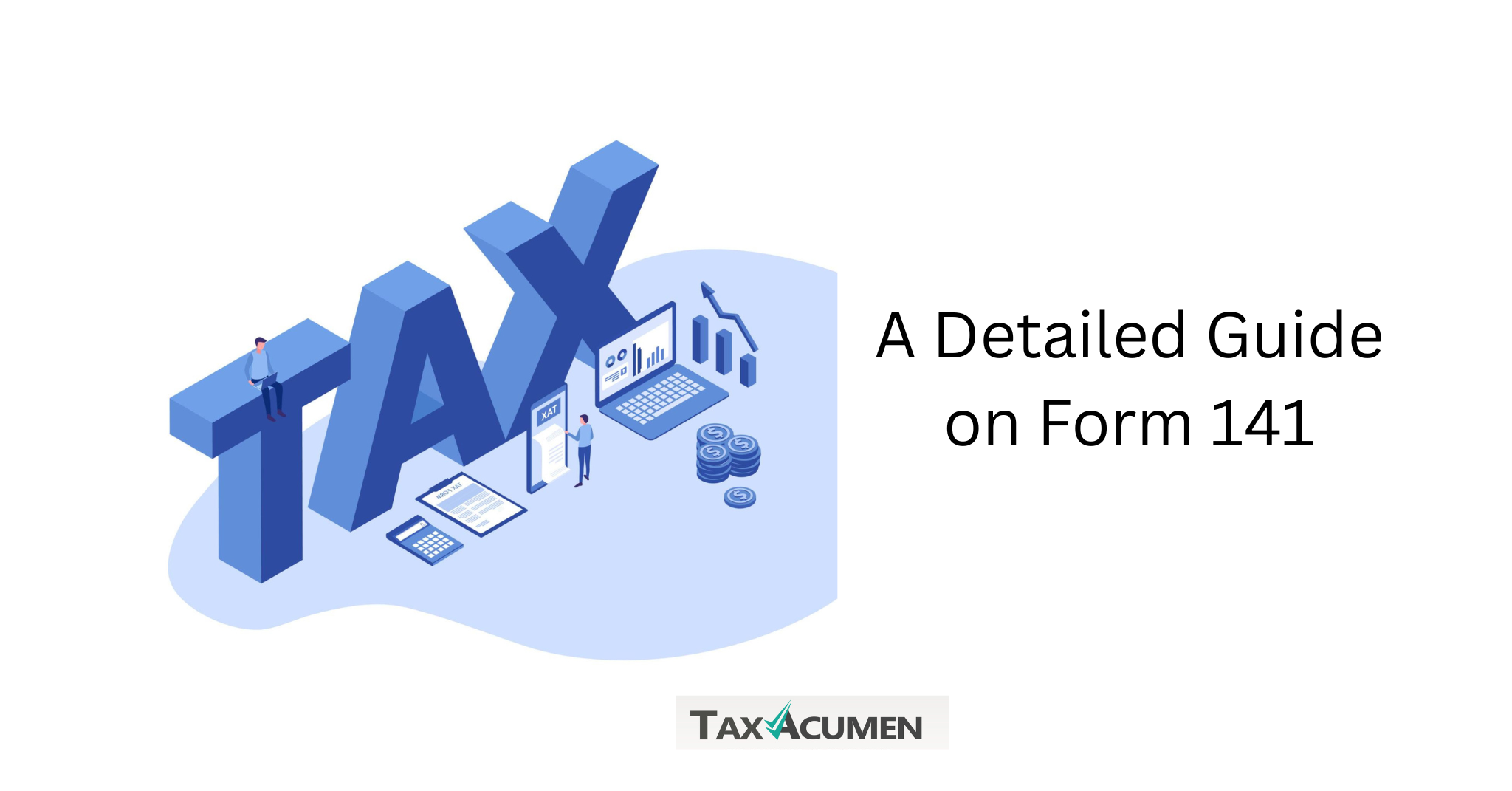
Anyone who has bought property, paid rent above a certain amount, hired a contractor without a TAN, or sold a virtual digital asset knows how scattered TDS compliance used to be. Four forms, 26QB, 26QC, 26QD, and 26QE, each handled a different transaction. From 1st April 2026, the Income Tax Act, 2025 replaced all four with a single form, Form 141.

What Form 141 Does

Form 141 is a challan-cum-statement, combining tax payment and reporting into one step. It’s filed under Section 393(1) of the Income Tax Act, 2025, and is entirely PAN-based, so deductors don’t need a TAN to file it. This suits its audience well, since it’s mainly meant for individuals and HUFs not otherwise required to hold a TAN.

Filers now select the schedule matching their transaction, instead of choosing between four different forms:

  • Schedule A, TDS on rent paid to a resident landlord, where monthly rent exceeds Rs 50,000
  • Schedule B, TDS on purchasing immovable property from a resident seller, where the value exceeds Rs 50 lakh
  • Schedule C, TDS on payments to contractors or professionals by individuals or HUFs not covered under regular TDS filing
  • Schedule D, TDS on specified virtual digital asset transactions, such as crypto transfers

Each schedule replaces one of the earlier forms, but the underlying TDS rates and thresholds haven’t changed. This is purely a filing and structural reform.

How to File Form 141

Filing happens entirely online. The general path is to log in using your PAN, go to e-File, then e-Pay Tax, select Income Tax Act, 2025, choose New Payment, and pick Form 141. From there, select the relevant schedule and enter the deductor’s and deductee’s PAN, the transaction value, the date of payment or credit, and the TDS amount.

One useful feature is that a single filing can now cover multiple parties of the same status. If a property has more than one seller, or a rented property has more than one landlord, all of them can be reported in one filing with percentage-wise allocation, rather than filing separately for each pairing as the old system required.

The due date remains the same as before, thirty days from the end of the month in which TDS was deducted. A deduction made in April 2026 needs filing and payment by 31st May 2026. A single Form 141 can only cover deductees sharing the same month of deduction, if the month differs, separate filings are needed.

What Changed Beyond the Form Number

Along with the consolidation, a few related changes matter. The TDS certificate tenants used to issue after filing Form 26QC, earlier called Form 16C, is now called Form 132. Correction of a filed Form 141 is possible, though not through the regular e-filing portal correction flow used for other returns. The new form also includes prefilled details and validation checks meant to catch common errors, such as PAN mismatches, before submission.

Conclusion

Form 141 brings four previously disconnected filings under one roof, which should reduce the friction individuals and HUFs face when dealing with property, rent, contractors, or crypto-related TDS. The rates and thresholds for each transaction type stay the same, so the real change lies in a simpler filing path and fewer repeated submissions for transactions involving multiple parties. Getting familiar with the right schedule for your transaction is the main thing to get right under this new system.

Understanding Interest Tax under Section 393(1)

Firms pay agents for sales or deals. Section 393(1) requires TDS on these commission or broking earnings for residents. Payers deduct 2% when yearly totals exceeds Rs 20,000. Individuals join if prior turnover exceeds Rs 1 crore in business or Rs 50 lakh in professional limits. Agents claim credits in returns. Compliance tracks aggregates and deposits timely to avoid penalties.

This provision targets intermediary payments. Any resident payer qualifies, from companies to audit-bound persons. It excludes insurance commissions under the relevant separate provision. Deduct at the credit or payment first. The threshold rose to Rs 20,000 from April 2025.

Commission Meaning

A broad definition covers agent acts. Payments reward services in sales or buys, excluding professionals. Real estate deals, stock trades, or goods sales trigger it. Indirect receipts count too.

Who Pays TDS

Everyone deducts above the limit. Governments, firms, and trusts lead. Individuals or HUFs step in post-audit threshold. No exemptions for big players.

Threshold Limit

Aggregate rules apply. Skip if under Rs 20,000 yearly per payee. Cross it and deduct the full amount. Separate from other sections.

TDS Rate Details

Flat 2% hits most cases. No PAN jumps to 20%. Basic rate, no extras. The table sums it up:

Payee StatusRateThreshold
With PAN2%Rs 20,000
No PAN20%Rs 20,000

Deduction Timing and Deposit Deadlines

Act at account entry or cash out early on. Suspense ledgers qualify. Match other TDS. Other than March: 7th next month. March: April 30. Government same-day sans challan. Use Challan 281 online.

Exemptions List

Several skip deductions:

  • Insurance or loan commissions.
  • Securities trades broking.
  • Employee payouts under salary provisions.
  • BSNL/MTNL PCO franchisees.
  • Ad agency payments by media.
  • RBI turnover to banks.

Personal services or pure interest is exempt too.

Certificates and Returns

Issue Form 16A quarterly: August 15, November 15, February 15, and June 15. File Form 26Q by July 31, October 31, January 31, and May 31.

Examples in Action

The shop pays the sales agent Rs 25,000 yearly. Deduct 2% or Rs 500 in total. Net occurs Rs 24,500.

The firm gives the distributor Rs 15,000 and then Rs 10,000. The aggregate of Rs 25,000 needs Rs 500 TDS.

Compliance Steps

Payers verify PAN upfront. Track per agent yearly. Deduct precisely and record well. Deposit with CIN. File returns accurately. Mail certificates promptly.

Lower Rate Process

Agents apply for a lower or nil deduction certificate under the relevant provision. Officers grant it if income is low. Validate certs: PAN, year, and section match. Quote the right number.

Conclusion

Section 393(1) provides for 2% TDS on commissions exceeding Rs 20,000 per year. Agents in sales or broking face it from firms and qualifying individuals. Deduct at credit or pay; deposit by 7th or 30th April. Exemptions cover insurance, securities, and employees. Form 26Q quarterly, 16 Timeliness keeps compliance clean. Track aggregates, verify PAN, use lower certs wisely. Strong practice blocks penalties and ensures smooth tax flow.