Form 10 IEA: Choosing the Old Tax System Made Simple

The new tax regime under Section 115BAC(1A) and the old tax regime with deductions and exclusions are the two tax regimes that the Indian government permits salaried individuals and specific taxpayers to select between. The taxpayer must submit Form 10-IEA in order to keep the old regime.

What is Form 10-IEA?

The Income Tax Department introduced Form 10-IEA, a statutory declaration form. If a taxpayer wants to take advantage of deductions like the HRA, Section 80C benefits, standard deduction, etc., they can choose to stay under the old tax regime and avoid the default new one. This is particularly relevant for taxpayers who make money from their business or profession.

Who Should File Form 10-IEA?

Some taxpayers do not need to file Form 10-IEA. It is only required for Hindu Undivided Families (HUFs) and persons who:

  • Having earnings that are classified as “Profits and Gains of Business or Profession”, choose to stick with the old tax regime rather than the new tax regime that was implemented in AY 2024–2025.
  • It is not required for salaried individuals without company or professional income to file Form 10-IEA. When submitting their ITR, they have the option to select the previous regime directly. Nevertheless, the regime is only effective for that financial year after it is chosen.

Form 10-IEA: Why Was It Introduced?

Taxpayers previously opted for the new regime using Form 10-IE. However, the new tax regime is now the default choice starting in AY 2024–2025. Therefore, Form 10-IEA must be submitted by those who want to stay under the old regime.

By switching to a low-rate, no-exemption system, the government is attempting to simplify taxes while still providing flexibility to individuals who like common deductions.

The Procedure to File Form 10-IEA (Step-by-Step Guide)

Follow these simple steps to file Form 10-IEA online through the Income Tax e-filing portal:

Step 1: Log in on the e-Filing Portal

  • Visit: https://www.incometax.gov.in
  • Click on ‘Login’.
  • Enter your PAN, password, and captcha code.

Step 2: Go to Income Tax Forms

  • On the dashboard, click:
  • ‘e-File’ > ‘Income Tax Forms’ > ‘File Income Tax Forms’

Step 3: Search and Select Form 10-IEA

  • Scroll down or enter ‘Form 10-IEA’ in the search box.
  • Click ‘File Now’ next to the form.

Step 4: Select the Correct Assessment Year

  • Choose the assessment year for which you’re filing the return.
  • Example: For FY 2024–25, select AY 2025–26.

Step 5: Check Required Documents & Click ‘Let’s Get Started’

  • You’ll be shown a list of details needed to file the form.
  • Once ready, click ‘Let’s Get Started’.

Step 6: Declare Business/Profession Income Status

  • If you have income under “Profits and Gains from Business or Profession”, select ‘Yes’.
  • Select the applicable due date for filing the return, then click ‘Continue’.
  • Click the “Help Document” link for support with due dates.

Step 7: Confirm Your Regime Selection

  • Click ‘Yes’ to confirm you are opting for the old tax regime.

Step 8: Fill Out All 3 Sections of the Form

i. Basic Information

  • Your name, PAN, assessment year, and status will be auto-filled.
  • If this is your first time opting out, the “Opting Out” option will be selected by default.
  • If you have previously filed Form 10-IEA, the “Re-entering” option will be auto-filled.
  • Click ‘Save’.

ii. Other Information

  • This section requires you to declare whether you have any IFSC unit (under Section 80LA).
  • If applicable, enter IFSC details and click ‘Save’.
  • If you’re opting out of the new regime, this panel may be blacked out.

iii. Declaration & Verification

  • Review the declaration section carefully.
  • Tick the confirmation boxes and verify the details.
  • Click ‘Preview’ to check the entire form before submission.

Step 9: e-Verify the Form

Choose one of the methods below to e-verify:

  • Aadhaar OTP
  • Digital Signature Certificate (DSC) – required if under audit
  • Electronic Verification Code (EVC) via net banking or pre-validated bank account

Step 10: Submit the Form

  • After successful verification, click ‘Yes’ to submit the form.

Step 11: Acknowledgement

Once submitted, a success message appears on screen with:

  • Transaction ID
  • Acknowledgement Receipt Number
  • Keep these details for reference.

To download the submitted form, go to:

  • ‘e-File’ → ‘Income Tax Forms’ → ‘View Filed Forms’

Due date: According to Section 139(1) of the Income Tax Act, you must file Form 10-IEA prior to the deadline for filing your Income Tax Return (ITR). For the majority of people, this is July 31st after the financial year ends.

Absence of Compliance: If you do not submit Form 10-IEA by the ITR deadline, the system will presume that you are selecting the default new choice, and you will not be able to claim exemptions or deductions permitted under the previous regime.

Conclusion

Form 10-IEA is a crucial document for taxpayers who want to take advantage of common deductions and exemptions while maintaining the old tax regime. The government’s objective to provide flexibility while promoting a simpler system is reflected in it. ITR processing runs smoothly and eliminates unnecessary tax charges when it is filed accurately and on time. At filing time, knowing when and how to utilise this form can help you avoid problems and save money.

Types of Direct Tax

A Direct Tax is one that is levied upon a person or entity and paid to the government directly. It is impossible to transfer the tax burden to another person.

These are few types of direct tax:

Income Tax (IT)

According to the provisions of the Income Tax Act of 1961, income tax is a tax that is directly imposed on the earnings that individuals, Hindu Undivided Families (HUFs), businesses, limited liability partnerships (LLPs), enterprises, and other entities earn. Five categories are used to categorise the Income: Capital Gains, Profits and Earnings from Business or Profession, Income from House Property, Income from Salaries, and Income from Other Sources. After calculating the relevant deductions and exemptions (such as those provided by Sections 80C, 80D, etc.), tax is due on the total taxable income. Through the Finance Act, the government updates tax rates and slabs every year (Union Budget). The Government of India receives most of its revenue from income tax.

Corporate Tax

According to the Income Tax Act of 1961, Corporate tax is imposed on the net profit of businesses, both local and foreign. While international corporations are only taxed on their income made in India, domestic companies are taxed on their entire income. Under Sections 115BAA and 115BAB, businesses may choose to use concessional rates, subject to specific requirements. Companies may also be required to pay health and education cess and surcharges in addition to corporate tax. India’s revenue is largely derived from corporate taxes, particularly from big businesses in industries like manufacturing, finance, and information technology.

Capital Gains Tax

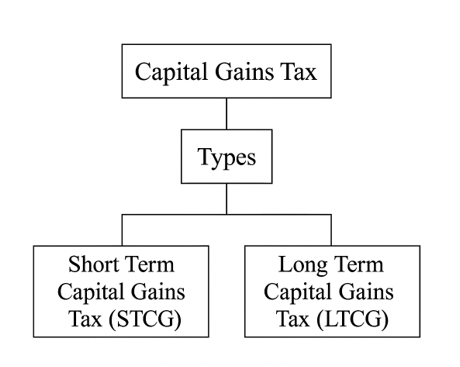
When Capital Assets, such as buildings, land, gold, shares, and other valuable property, are sold or transferred, the profits are subject to capital gains tax. It is divided into two categories according to the period of time the asset is held: Short-Term Capital Gains (STCG) and Long-Term Capital Gains (LTCG). Depending on the asset type and holding duration, the tax rate changes.

Securities Transaction Tax (STT)

The Securities Transaction Tax (STT) is a direct tax levied on securities-related transactions carried out on authorised stock exchanges, including the buying and selling of shares, derivatives, and equity-orientated mutual funds. In order to streamline the taxes of stock market transactions, it was created by the Finance Act of 2004. Different transaction types have different STT rates. Depending on the nature of the transaction, the buyer, seller, or both may be responsible for paying the tax, which is collected by stock exchanges.

Gift Tax

The 1958 Gift Tax Act served as the original legislation governing gift tax; however, it was repealed in 1998. Gift taxation is now regulated under Section 56(2)(x) of the Income Tax Act of 1961. The amount of gifts given to an individual or HUF in a fiscal year that exceed ₹50,000 in value (apart from certain relatives or exempt categories) is taxed as income from other sources. Some presents, including those given as a marriage present or as an inheritance, are still excluded.

Wealth Tax (Abolished)

A direct tax referred to as wealth tax was imposed on the net worth of specific people, HUFs, and businesses if it beyond the specified amount. It was regulated by the 1957 Wealth Tax Act. Real estate, gold, expensive cars, and jewellery were all subject to wealth tax. The Finance Act of 2015 eliminated wealth tax for the Assessment Year 2016–17 due to the high expenses of compliance and low revenue yield. However, in order to maintain transparency and stop tax evasion, high-value assets are still required to be reported on income tax returns.

Tax System in India: Meaning, Types, and Structure

Taxation is an essential resource for governance and revenue collection, and it is a sovereign right. The Constitution of India establishes the basis for taxation and divides authority between the central government and state governments.

In India, taxes are imposed in accordance with laws passed by the state and central governments. Direct and indirect taxes are the two main categories of taxes, and several acts and constitutional clauses regulate how they are implemented.

Constitutional Framework

The power to levy taxes in India is derived from:

Article 265: “No tax shall be levied or collected except by the authority of law.”

Article 246: Distribution of legislative powers under three lists:

  • Article 246(1): Union List
  • Article 246(3):  State List
  • Article 246(2): Concurrent List

Seventh Schedule: Subjects on which central, state, or both can levy taxes.

Classification of Taxes

Direct Tax: One cannot transfer direct taxes to another party; they are imposed directly on people or organisations. Examples are corporation tax and income tax. They are progressive, which means that those with higher incomes pay more, so advancing income equality.

Indirect Tax: Imposed on products and services and have the possibility to be transferred from producers to consumers. Customs duty, excise duty, and GST are a few examples. Regardless of income, all consumers pay the same rate, making these regressive in general.

CriteriaDirect TaxIndirect Tax  
NatureProgressiveRegressive
ExampleIncome Tax, Corporate TaxGST, Customs Duty
Burden             On the taxpayerPassed on to the consumer
Administered byCBDTCBIC
ComplianceComplex and documentation-heavyEasy to collect at point of sale

Cess and Surcharge

The terms “cess” and “surcharge” are frequently confused. Article 270 of the Constitution refers to a cess, which is a form of tax collected for a particular purpose, such as infrastructure or education. However, as stated in Article 271, a surcharge is an additional tax that is imposed on top of already-existing taxes, typically to generate money for certain purposes.

The Consolidated Fund of India, which the government uses for public spending, receives the sums from both cess and surcharge. In the M/s. SRD Nutrients Pvt. Ltd. vs. Commissioner of Central Excise, Guwahati [SC 2017] case, the Supreme Court made it clear that the higher education and education cess should be regarded as a surcharge.

Advantages and Disadvantages

AspectDirect TaxesIndirect Taxes  
NatureProgressive: determined by wealth or incomeRegressive – same rate for everyone
ProgressPromotes income equalityThe burden falls more on lower-income consumers
TransparencyClearly specified and documentedHidden in prices, consumers are unaware
Tax BurdenCannot be shifted to othersShifted to end consumers
AdministrationComplicated filing and compliance proceduresEasily gathered at the moment of sale
Stability of RevenuePredictable government revenueVaries according to patterns in consumption
Impact on InflationCan aid in reducing inflationTends to cause inflation and price increases
Risk of ComplianceIncreased chances of tax evasionIntegrated collection reduces evasion
Impact on EconomyCould discourage investmentPromotes saving; can be modified to meet policy objectives

This Article is here for educational purpose only. The Author here explains the very basic concept of Tax System in India.