Types of Direct Tax

A Direct Tax is one that is levied upon a person or entity and paid to the government directly. It is impossible to transfer the tax burden to another person.

These are few types of direct tax:

Income Tax (IT)

According to the provisions of the Income Tax Act of 1961, income tax is a tax that is directly imposed on the earnings that individuals, Hindu Undivided Families (HUFs), businesses, limited liability partnerships (LLPs), enterprises, and other entities earn. Five categories are used to categorise the Income: Capital Gains, Profits and Earnings from Business or Profession, Income from House Property, Income from Salaries, and Income from Other Sources. After calculating the relevant deductions and exemptions (such as those provided by Sections 80C, 80D, etc.), tax is due on the total taxable income. Through the Finance Act, the government updates tax rates and slabs every year (Union Budget). The Government of India receives most of its revenue from income tax.

Corporate Tax

According to the Income Tax Act of 1961, Corporate tax is imposed on the net profit of businesses, both local and foreign. While international corporations are only taxed on their income made in India, domestic companies are taxed on their entire income. Under Sections 115BAA and 115BAB, businesses may choose to use concessional rates, subject to specific requirements. Companies may also be required to pay health and education cess and surcharges in addition to corporate tax. India’s revenue is largely derived from corporate taxes, particularly from big businesses in industries like manufacturing, finance, and information technology.

Capital Gains Tax

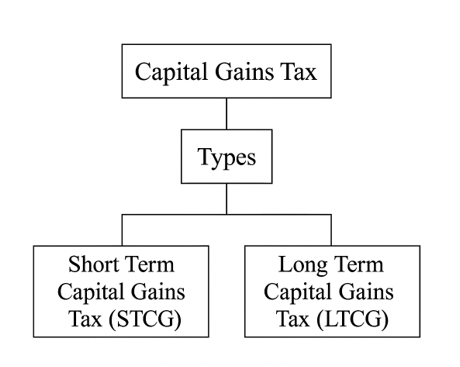
When Capital Assets, such as buildings, land, gold, shares, and other valuable property, are sold or transferred, the profits are subject to capital gains tax. It is divided into two categories according to the period of time the asset is held: Short-Term Capital Gains (STCG) and Long-Term Capital Gains (LTCG). Depending on the asset type and holding duration, the tax rate changes.

Securities Transaction Tax (STT)

The Securities Transaction Tax (STT) is a direct tax levied on securities-related transactions carried out on authorised stock exchanges, including the buying and selling of shares, derivatives, and equity-orientated mutual funds. In order to streamline the taxes of stock market transactions, it was created by the Finance Act of 2004. Different transaction types have different STT rates. Depending on the nature of the transaction, the buyer, seller, or both may be responsible for paying the tax, which is collected by stock exchanges.

Gift Tax

The 1958 Gift Tax Act served as the original legislation governing gift tax; however, it was repealed in 1998. Gift taxation is now regulated under Section 56(2)(x) of the Income Tax Act of 1961. The amount of gifts given to an individual or HUF in a fiscal year that exceed ₹50,000 in value (apart from certain relatives or exempt categories) is taxed as income from other sources. Some presents, including those given as a marriage present or as an inheritance, are still excluded.

Wealth Tax (Abolished)

A direct tax referred to as wealth tax was imposed on the net worth of specific people, HUFs, and businesses if it beyond the specified amount. It was regulated by the 1957 Wealth Tax Act. Real estate, gold, expensive cars, and jewellery were all subject to wealth tax. The Finance Act of 2015 eliminated wealth tax for the Assessment Year 2016–17 due to the high expenses of compliance and low revenue yield. However, in order to maintain transparency and stop tax evasion, high-value assets are still required to be reported on income tax returns.

Tax System in India: Meaning, Types, and Structure

Taxation is an essential resource for governance and revenue collection, and it is a sovereign right. The Constitution of India establishes the basis for taxation and divides authority between the central government and state governments.

In India, taxes are imposed in accordance with laws passed by the state and central governments. Direct and indirect taxes are the two main categories of taxes, and several acts and constitutional clauses regulate how they are implemented.

Constitutional Framework

The power to levy taxes in India is derived from:

Article 265: “No tax shall be levied or collected except by the authority of law.”

Article 246: Distribution of legislative powers under three lists:

  • Article 246(1): Union List
  • Article 246(3):  State List
  • Article 246(2): Concurrent List

Seventh Schedule: Subjects on which central, state, or both can levy taxes.

Classification of Taxes

Direct Tax: One cannot transfer direct taxes to another party; they are imposed directly on people or organisations. Examples are corporation tax and income tax. They are progressive, which means that those with higher incomes pay more, so advancing income equality.

Indirect Tax: Imposed on products and services and have the possibility to be transferred from producers to consumers. Customs duty, excise duty, and GST are a few examples. Regardless of income, all consumers pay the same rate, making these regressive in general.

CriteriaDirect TaxIndirect Tax  
NatureProgressiveRegressive
ExampleIncome Tax, Corporate TaxGST, Customs Duty
Burden             On the taxpayerPassed on to the consumer
Administered byCBDTCBIC
ComplianceComplex and documentation-heavyEasy to collect at point of sale

Cess and Surcharge

The terms “cess” and “surcharge” are frequently confused. Article 270 of the Constitution refers to a cess, which is a form of tax collected for a particular purpose, such as infrastructure or education. However, as stated in Article 271, a surcharge is an additional tax that is imposed on top of already-existing taxes, typically to generate money for certain purposes.

The Consolidated Fund of India, which the government uses for public spending, receives the sums from both cess and surcharge. In the M/s. SRD Nutrients Pvt. Ltd. vs. Commissioner of Central Excise, Guwahati [SC 2017] case, the Supreme Court made it clear that the higher education and education cess should be regarded as a surcharge.

Advantages and Disadvantages

AspectDirect TaxesIndirect Taxes  
NatureProgressive: determined by wealth or incomeRegressive – same rate for everyone
ProgressPromotes income equalityThe burden falls more on lower-income consumers
TransparencyClearly specified and documentedHidden in prices, consumers are unaware
Tax BurdenCannot be shifted to othersShifted to end consumers
AdministrationComplicated filing and compliance proceduresEasily gathered at the moment of sale
Stability of RevenuePredictable government revenueVaries according to patterns in consumption
Impact on InflationCan aid in reducing inflationTends to cause inflation and price increases
Risk of ComplianceIncreased chances of tax evasionIntegrated collection reduces evasion
Impact on EconomyCould discourage investmentPromotes saving; can be modified to meet policy objectives

This Article is here for educational purpose only. The Author here explains the very basic concept of Tax System in India.

INCOME TAX SLAB – OLD vs. NEW TAX REGIME

In the 2020 budget, the Indian government introduced a new tax regime to simplify the tax system. Taxpayers have the option to choose between the old and new tax regimes under the existing tax system. Both regimes use different methods for calculating income taxes, and their tax slabs and deductions differ; each tax system has unique advantages over the others.

The old regime permitted several exemptions and deductions. The new regime, on the other hand, aims for a simple process of filing by eliminating most of these deductions while offering reduced tax rates. A major advantage of the new system for FY 2025–2026 is that the tax burden is zero for incomes up to ₹12,00,000.

Old Tax Regime

The traditional Indian tax system is referred to as the “old tax regime”. The HRA, LTA, Sections 80C and 80D, and other exemptions and deductions are available to taxpayers under this regime to reduce their taxable income and, consequently, their tax liabilities. The old and new tax systems are offered to the taxpayers according to their choice.

New Tax Regime

In 2020, the new tax system went into effect. Tax rates are lowered for all income levels. Most exemptions and deductions, including HRA, LTA, 80C, 80D, and others, are eliminated, somehow. This led to a lack of interest in the new tax system. Currently, the default tax system is the new one as well. In Budgets 2023 and 2024, the government made a few changes to increase the regime’s stability.

FeaturesOld Tax RegimeNew Tax Regime
(FY 2025-2026)
Tax slabsHigherLower
Deductions/ExemptionsNumerous deductions and exemptions for various investments, expenses, and savings. These include deductions under Sections 80C, 80D, 80E, LTA, and house rent allowances.Restricted major deductions or exemptions.
Standard Deduction₹50,000₹75000
Income eligibility for rebate u/s 87AUp to ₹5,00,000 Rebate: 12,500Up to ₹12,00,000 Rebate: 60,000
ComplexityComplex due to various deductionsSimplified tax filing
Best forPeople who are claiming and paying home loan interest, HRA, etc.People who do not claim HRA, House property loss due to loan repayment, etc.
*Comparison between NEW TAX REGIME and OLD TAX REGIME

Which regime is best to choose?

You should consider several criteria while deciding between the new and old tax regimes:

  • Level of Income: Determine your yearly income and compare it to the tax slabs under the two regimes.
  • Financial Objectives: Think about your financial goals. This can involve making a long-term investing plan or setting aside money for retirement. Through deductions, the previous administration promoted smart saving.
  • Financial responsibilities: The old regime might have been preferable if planning for home loan, the income structure consists of HRA, where Sukanya samriddhi scheme is found more appropriate to investment for girl child, or any other financial planning.
  • Tax Deductions: Speak with a financial counsellor or use a tax calculator. Before choosing, you can use this to compare the actual taxes due under the two regimes.

Tax slab for financial year 2025 – 2026

New Tax Regime

The revised tax slabs under the new regime that are applicable from 1st April 2025 are as follows:

Tax SlabTax Rate  
Upto  Rs. 4,00,000Nil  
Rs. 4,00,001 – Rs. 8,00,0005%  
Rs. 8,00,001 – Rs. 12,00,000  10%  
Rs. 12,00,001 – Rs. 16,00,00015%  
Rs. 16,00,001 – Rs. 20,00,000  20%
Rs. 20,00,001 – Rs. 24,00,000  25%
More than 24,00,000  30%
*Revised Tax Slab Chart for New Tax Regime for FY 2025-2026 (AY 2026-2027)

Old Tax Regime

The tax slabs under the old regime is unchanged for AY 2025-26 and AY 2026-27 are as follows:

Tax SlabTax Rate 
Upto  Rs. 2,50,000Nil  
Rs. 2,50,001 – Rs. 5,00,0005%  
Rs. 5,00,001 – Rs. 10,00,000  20%  
Rs. 10,00,001 – Rs. 15,00,00030%  
More than 15,00,000  30%
*TAX SLAB for OLD TAX REGIME – NO Change in Slab

How to chose which Regime is better for you?

Taxpayers must know that NEW TAX REGIME has been set as default for all eligible taxpayers. One who wants to opt for the OLD TAX REGIME for tax computation, must select “OPT OUT” option within the due date of the return.

Also, the Taxpayer must mention Date of filing and Acknowledgement Number of the FORM 10-IEA for the same.

Disclaimer: The content here is only for reference and is subject to update time to time. To get to know the tax liability, consult your professional advisor or connect to our operation team via 91-9267970588 or taxacumen.consultancy@gmail.com

INCOME TAX REBATE UNDER SECTION 87A

Introduction

A tax deduction granted by Section 87A of the Income Tax Act, 1961 to Indian residents (it is not applicable to HUFs, businesses, or firms) whose total income for a financial year does not exceed ₹5,00,000. This ceiling limit is for the old tax regime. If your yearly income is ₹5 lakh or less, you are eligible to receive a deduction on the income tax that you owe to pay. The deduction is equal to either ₹12,500 or 100% of the tax owed, whichever is less.

After deducting other expenses, such as those under Section 80C or 80D, this deduction is applied. Your income may therefore be exempt from income tax altogether if it falls below the ₹5 lakh threshold. But if your income even slightly exceeds ₹5 lakh, you would not be qualified for this rebate.

The Indian Government is promoting the new tax regime to follow for tax payers to provide many additional benefits for the same. In this context, the limit of 87A has been increased for those who opt for the new tax regime. The said limits according to the relevant year is being discussed here in the article below.

Key Points for Old Tax Regime

  • Only applicable to individuals who are Indian residents and does not apply to Hindu Undivided  Family (HUF’s), Companies, or firms.
  • Yearly total income is 5 lakh or less,
  • Deduction is equal to either ₹12,500 or 100% of the tax owed, whichever is less,
  • Deductions (like 80C, 80D, HRA) is allowed

*There is no change in limit for those who opt for the old tax regime for this particular exemption to be claimed. This above said limit is applicable to FY 2024- 2025 and FY 2025-2026 as well.

Key Points for New Tax Regime

  • Only applicable to individuals who are Indian residents and does not apply to Hindu Undivided Family (HUF’s), Companies, or firms,
  • Yearly total income is 7 lakh or less. (for FY 2024-20205)
  • Deduction is equal to either ₹25,000 or 100% of the tax owed, whichever is less
  • Deductions (like 80C, 80D, HRA) is not allowed (except NPS, EPF, standard deduction etc).

*In budget 2025, FM raised the limit of income to ₹ 12 Lacs for the exemption under section 87A from the Financial year starting from  1st April 2025, i.e. for FY 2025-2026 and rebate of Rs. 60,000 or 100%, whichever is less is allowed under the new regime for the same. 

Standard Deduction

Introduction: Pensioners and salaried individuals are allowed to claim the standard deduction without requiring proof or documentation from the salary or pension part of income. Here as well, there are two limits that have been provided to tax payers on the basis of old and new tax regimes. By lowering the gross salary, this deduction lowers the taxable income.

Eligibility: Only pensioners and salaried individuals are eligible for the deduction of 75,000 under the new tax regime and 50,000 for old tax regime.

For example, a salaried person making ₹7.75 lakh a year would qualify for the full ₹25,000 refund under Section 87A since their taxable income would be ₹7 lakh after the standard deduction for the year 2024 – 2025 as a financial Year.

Marginal Relief under Section 87A

Marginal relief has been introduced for those taxpayers who earn a little bit more than the rebate maximum (such as ₹7,01,000 under the new regime) from having to pay more tax than the additional income. To prevent this scenario, it has been provided.

Also, there is no provision of marginal relief for taxpayers who opt for the old regime, if income exceeds ₹5,00,000 even with ₹1. This benefit is available for the new tax regime taxpayers.

In case, the taxpayer is earning ₹5,00,001 under the old tax regime after all the deductions other than 87A, the person needs to pay tax on ₹5,00,001 ignoring the benefit of 87A. The taxpayer does not fall for the limit here to claim section 87A.

Example of Marginal Relief

  • Income: ₹7,00,000 → Tax = ₹0 (after rebate)
  • Income: ₹7,01,000
  • Tax on ₹7,01,000 = ₹25,050
  • Extra income = ₹1,000
  • Extra tax = ₹25,050

The provision of marginal relief helps to avoid this unjust burden. The amount of tax that must be paid cannot exceed the amount which would be payable for the income of 7,00,000 and the minor excess income earned over the year. This means that instead of paying ₹25,050 in taxes, the individual will only pay ₹1,000.

Feature  Old Tax Regime  New Tax Regime (FY 2024-2025)  
Eligibility  Resident Individuals  Resident Individuals  
Rebate Income Limit  Total income ≤ ₹5,00,000  Total income ≤ ₹7,00,000  
Maximum Allowable Rebate  ₹12,500  ₹25,000  
Marginal Relief Available?  Not specifically statedYes, provided to avoid paying more tax on minor excess income  
Deductions (like 80C, 80D, HRA)  Allowed  Not allowed (except NPS, EPF, standard deduction etc.)  
Best for Whom?  Those whose income is below ₹5 lakh due to deductions  Those with incomes up to ₹7 lakh and no or few deductions  

How to File a Section 87A Tax Rebate Claim

Step 1: Figure out how much money you made overall during your financial year.

Step 2: Reduce the amount of your tax deductions for investments, tax savings, etc.

Step 3: After deducting the tax deductions, calculate your total taxable income.

Step 4: Fill out your ITR by declaring your gross income and tax deductions.

Step 5: If your total income stays below certain thresholds, you can claim a tax refund under section 87A.

Disclaimer: The content here is only for reference and is subject to update time to time. To get to know the tax liability, consult your professional advisor or connect to our operation team via 91-9267970588 or taxacumen.consultancy@gmail.com

GST REGISTRATION PROCESS in INDIA

Any person falling under the laws of GST must need to get registered under the GST and have the GSTN. Click the link here to know, whether you are falling within limit GST registration threshold limit, https://taxacumen.in/?p=978 and to understand the benefits of the same https://taxacumen.in/?p=986

Here, we will not discuss again whether you are required to have GST or not, but to know step-by-step registration process to apply for the same.

Step 1

Go to the Website https://www.gst.gov.in/ and to register, go to the “Register” tab on the Right side in Top location. If you are here for the first time go to “New Registration” and if you already have TRN, Click to TRN.

Step 2

You will get to watch the screen as mentioned here, fill the details asked here to proceed when you dont have TRN already

Select whether you are  Taxpayer, Input Service Distributor(ISD), Tax Deductor, Tax Collector (Ecommerce Operators), Non Resident Taxable Person, GST Practitioner, or else.

Also, mention your legal name as per Permanent Account Number (PAN) only, Business Name can be differ.

Mention your email Address and Mobile number for OTP and all future correspondence with the GST Department. Make sure to provide active email and mobile number.

And after filling all the details and information here, Click on Proceed to reach the next page.

Step 3

You will receive a page to enter a valid OTP, here Email and Mobile OTP will be the same. You can check and mention any of them to proceed.

Step 4

Once the OTP you entered above verified and approved, you will get this Screen, where TRN (Temporary Reference Number) will be mentioned for you. 

Save the TRN and write it down to your notepad for future correspondence. You will also get the said TRN through the text in messages and in your email mentioned in the application.

Step 5

Now, you have TRN with you to proceed for GST Registration. You must know that TRN will be available for 15 days to complete the process with the same TRN. Otherwise, a new TRN will be required.

Now you will login the Portal with your Received TRN and OTP to be received through your email and mobile both. After entering the OTP, you will be reached at a page where your Draft application is being shown.

Step 6

Here, you must complete this draft application within 15 days from generating the TRN. Till the date you didn’t get a GST Number from the GST Department, you can login with TRN for your registration.

Step 7

Here, you must provide Trade Name of business, Address details and proof of premise where the business is being operated, Personal details of Proprietor/Partners/Directors, Documentary proof of any additional premise for business to be attached, and all the details asked in the draft form must be provided. 

Here in the image, this is only first page of the draft form. The Applicant must complete the entire draft application, then Profile completion % mentioned in the right side of the image will be shown as 100%

Step 8

Aadhaar Authentication process

After the completion of the draft form, verification process is being done according to rules and provisions. There is an option to do Aadhaar Authentication with biometric verification of the primary authorized person. Where the mobile number of the primary responsible person used for registration is the same number with which Aadhaar has been linked, it is possible to authenticate the Aadhaar online with OTP. It cuts the time process of approval from the department within 7 days. 

Also, where a person opts to not to authenticate Aadhaar as described here before, he/she  can upload an Aadhaar copy to complete the KYC process. In such case, the GST Officer must verify the principal place of business physically and the time limit to approve the GST Registration Application is within 30 days.

It is advisable and beneficial to do Aadhaar authentication with biometric verification for GST Registration.

Step 9 

Approval of GST Application

Once the department is satisfied with all the details mentioned here and documents attached, the application will be approved. The applicant will receive an automatically sent mail having the login credentials in it.

Login path for First time users must be used, Here, Create the User Id ( not changeable) and change the system password given by the department through the mail.

Step 10 

Bank Account Update

Generally people thinks GSTN is received and work is done. But, this is untrue. The registered taxpayer must add their bank details with a cancel cheque or bank passbook first page mandatorily within 45 days from the date of registration granted.

In case of non compliance, the department can cancel the GST Registration after the deadline passed.

About Author – Deepa Kaintura

I am a lawyer by profession. I am a legal consultant in TaxAcumen providing services to corporates about GST, Income Tax, ROC Compliances, etc. My love for finance and law encouraged me to write and share the knowledge with the readers here. For any query, reach us at 

WhatsApp : +91-9267970588 Email I’d:taxacumen.consultancy@gmail.com

BENEFITS OF GST REGISTRATION IN INDIA 

In GST (Goods and Service Tax) Laws, GST Registration is not required to be done for all the people who are engaged in some kind of business and other activities. 

In General, GST Registration is considered as a primary requirement for doing the business, but this is not the case. To know more about and check the applicability and threshold concept in GST Law, Click here https://taxacumen.in/?p=978

There are many activities which are not to be taxed under GST and also, there is an exemption to register according to threshold limit and place of business. 

In spite of the threshold limit, any business entity can voluntarily get itself registered under the GST Laws but once it gets registered, all the provisions, rules and regulations are binding upon and must be complied with.

Here, we will talk about the benefits of getting a GST Number whether or not, taken voluntarily or in other cases.

BENEFITS OF GST Registration in India

  1. Availability of ITC Claim for Tax Payer

A business who pays GST on input services and goods, subject to  availability as per law, can claim the said GST Paid as ITC ( Input Tax Credit). Without GST, the same GST Paid is to be added to the cost of operations and no ITC can be claimed. 

  1. Composition Scheme 

Small Business owners are being allowed to pay lower rates of GST and to be known as composite Dealers with some restrictions and some benefits as well. Small Business with Turnover upto 1.5 Crore / 75 lakhs, can get the benefit under this scheme. Not all documents are required to be maintained. But NO ITC is allowed to businesses using this scheme and they must not claim any ITC. Cash is to be paid for the same.

  1. Simplified Tax System

Before July 2017, business entities must comply and ensure proper documentation and working as per many indirect tax laws such as Excise law, Service tax, VAT, etc. But with the implementation of GST, many laws are merged with GST and now, only one law needs to be taken care of. 

Returns under respective laws were required to be filled, and it was a burden on the businesses and also added extra cost to them. But now, only GST returns and Tax payments are needed. 

  1. Elimination of Double Taxation

GST is based on the “Tax on value addition” concept.

For example, Mr. A Buys a bag for Rupees 1,000/- ( One thousand in words Only) and resell the same at Rupees 1,200/- (Twelve Hundred in words Only). He is required to pay 

GST on Purchase ( ITC) 18% on Rs 1000/- is Rs 180/- 

GST on sale (Outward supplies) on Rs 1200/- is Rs 216/-

New GST Payable after claiming ITC is Rs. 36/- ( Rupees Thirty Six in words only)

  1. Better Recognition in Market

Practically, in many instances it has been a positive remark where the party is being registered in the GST Law, whether he is under the threshold  limit for the registration. The Market feels more confident when dealing with a GST Registered person to have a transparent and more genuine transaction.

  1. Legal Recognition

A person can start doing the business with his own PAN only. There is no legal requirement to have any specific business registration in many cases. But when we practically go to open a bank account for business (current account), the Bank asks for a legal recognition certificate along with the GST Registration certificate. 

These are some benefits to get GST Registration even in case, you are falling under the threshold limit for exemption. One must consider all the factors together before deciding to have GST or not.

GST REGISTRATION – THRESHOLD LIMIT and APPLICABILITY

In this digital era, even a common man knows about the GST( Goods and Services Tax) by its name. Any person thinks of any idea for doing business, the first thing which strikes in his/her mind is that he/she must get the business registered under the GST Act.

But is it true that every business person needs to get registered for GST? Actually not.

Under the GST Act, the threshold limit is a very important term, which is the basis of registration requirement. Here, we will discuss the threshold limit applicable according to the provisions and rules. Threshold limit is decided based on the turnover as specified in the GST Law for the same.

Other than the business falling under the limit specified, there are a few other activities for which GST Registration is bound to be taken.

A person who is running a business or planning to start a business, must ensure whether he/she falls into the threshold limit to avoid the GST Registration till the limit meets or he/she is mandatorily required to get registered under GST laws as discussed below.

Threshold Limits are as specified under the Laws

Any person engaged in providing the services, where the aggregate turnover* exceeds Rs. 20 Lacs must get GSTN to do the business.

For special category states**, the above mentioned limit of Rs 20 Lacs to be considered as Rs 10 Lacs for checking the applicability.

Now, for the sale of goods within the same state, the threshold limit for states other than special category states, is Rs. 40 Lacs for intra state transactions. (Special category states** will be considered Rs. 20 Lacs)

* Aggregate Turnover means

The Aggregate Value of

  1. all taxable supplies (excluding inwards transactions chargeable on Reverse Charge Mechanism basis), 
  2. Exempt supplies
  3. Exports of goods or services or both
  4. Interstate supplies of persons with same PAN on all India basis, but, excluding the CGST, SGST, IGST, and cess.

** Special Category states mean the states of Arunachal Pradesh, Assam, Jammu and Kashmir, Manipur, Meghalaya, Meghalaya, Mizoram, Nagaland, Sikkim, Tripura, Himachal Pradesh and Uttarakhand.

The States/UTs had the option to choose the threshold limit to be considered for GST Registration. Accordingly, below mentioned states/UTs chose the limit for themselves.

States/UTs who considers the limit of Rs. 40 Lacs, are as mentioned below:

Kerala, Chhattisgarh, Jharkhand, Delhi, Bihar, Maharashtra, Andhra Pradesh, Gujarat, Haryana, Goa, Punjab, Uttar Pradesh, Himachal Pradesh, Karnataka, Madhya Pradesh, Odisha, Rajasthan, Tamil Nadu, West Bengal, Lakshadweep, Dadra and Nagar Haveli and Daman and Diu, Andaman and Nicobar Islands, Chandigarh, Jammu and Kashmir, Ladakh and Assam.

Telangana, being a normal and the only state, falls for the limit of Rs. 20/10 Lacs, as the case may.

States/UTs who considers the limit of Rs. 20 Lacs, are here mentioned:

Puducherry, Meghalaya, Mizoram, Tripura, Manipur, Sikkim, Nagaland, Arunachal Pradesh and Uttarakhand.

Now, other than the business entities that fall under the threshold limit specified above, a few business entities are mandatorily required to get registered under the GST Laws, which are as follows:

  1. Interstate Suppliers
  2. Casual taxable Persons
  3. Chargeable under Reverse Charge Mechanism
  4. Non Resident Taxable Person
  5. Persons required to deduct TDS under law
  6. Persons required to collect TCS under law
  7. Input Service Distributors
  8. E-Commerce Operator
  9. Persons making a sale on behalf of someone else whether as an Agent or Principal
  10. Providing OIDAR Services
  11. Suppliers who supply goods through e-commerce operators who are liable to collect tax at source.

It is also to be noted that any business entity does not fall under the threshold limit specified here, can also get registered under the GST voluntarily. But once the registration is done, all provisions and rules will be applicable on those who opted the same.

Payment to MSMEs – An Overview

MSME Registered Enterprises are favoured by the Indian Government by various means , provisions and benefits for them. MSMEs massively contribute for the employment in Indian economy. These units are backbone of our economy.

To know who are eligible to be MSMEs and how to get register as MSME. Click on the link here https://taxacumen.in/?p=916

One of the benefits MSMEs get from the Government is the provisions and rules made for the payment to be made to MSMEs. Any transaction which is being done with MSME needs to be done timely to ensure proper legal compliances.

Payment to MSMEs need to be done as per agreed date (contract terms and conditions) or within 45 days, if there is an written agreement to avoid interest to be paid along with principal amount as per the Section 15 of the Micro, Small, Medium Enterprises Development Act, 2006. And in case of no written agreement, Payment must be done within 15 days from the acceptance of goods/services.

Also, In the Budget 2023 – 2024, the Finance Minister proposed an amendment to Section 43B of the Income Tax Act, 1961, to include payment made to MSMEs. It affects the big businesses who delay the payment to be made to MSMEs. Now, Deduction will be allowed to those for the expenses on accrual basis, only if payment made timely with the prescribed timelimit specified in MSMED Act.

Also, the Companies registered with Registrar of Companies (ROC) who have any outstanding dues to be paid to MSMEs suppliers, must file the “MSME FORM 1” for the half year starting from October, 2024 to March, 2025. The Due date to file the said form is 30 April 2025. And for the period starting from April to September, the MSME FORM 1 must be filed on or before 30th October.

The Buyer is required to pay compound interest, three times the RBI Bank Rate, on the principal amount, calculated monthly from the agreed payment date or 15 days after the acceptance of goods/services. The said Interest is not deductible (Disallowed) as an expense under the Income Tax Act, 1961.

To know more about the compliances to be followed while dealing with MSMEs and for the professional advice, one can reach to us: 

WhatsApp : +91-9267970588

Email I’d   : taxacumen.consultancy@gmail.com

Follow our Whatsapp Channel 

https://www.whatsapp.com/channel/0029VaXqUTnL2AU3Z1yxXD3S

Follow our Instagram Channel 

https://www.instagram.com/taxacumen.20/?next=%2Fthelegalarena%2F

About Author – Deepa Kaintura

I am a lawyer by profession. I am a legal consultant in TaxAcumen providing services to corporates about GST, Income Tax, ROC Compliances, etc. My love for finance and law encouraged me to write and share the knowledge with the readers here.  

Appointment of Auditor under the Company Act 2013

Any company registered under the Company Act needs to appoint an Auditor to comply with the provisions of the said Act. The company, whether registered as private limited, or one person company, or limited, or any other firm, are required to conduct the Audit. The purpose of Audit is to ensure financial compliance is being followed by all.

The section 139 states

“Every company shall, at the first annual general meeting, appoint an individual or a firm as an auditor who shall hold office from the conclusion of that meeting till the conclusion of its sixth annual general meeting and thereafter till the conclusion of every sixth meeting and the manner and procedure of selection of auditors by the members of the company at such meeting shall be such as prescribed”

Who can be Auditor?

A Chartered Accountant or a firm of qualified Chartered Accountant including LLP, can be appointed as the Auditor, If he satisfies the conditions for the same.

Tenure for the Auditor

The tenure for the Auditor is from the conclusion of the meeting in which appointment is proceeded till the 6th AGM. But, there is need for ratification of the said appointment in every Annual General Meeting held before.

Cooling Period

There are provisions of cooling period, in case of Listed company or companies as prescribed. The period for which appointment can be made:

  • An Individual as auditor for more than one term of 5 consecutive years; and
  • An audit firm as an auditor for more than two terms of 5 consecutive years.

It is to be noted that the break in the term for a continuous period of 5 years will be considered as fulfillment of the above said condition of cooling period.

Appointment of 1st Auditor

The first auditor shall be appointed by the Board within 30 days from the date of Incorporation. In case of failure of Board to appoint, the EGM needs to be called for appointment within 90 days from the expiry of 30 days given to the Board. The tenure is till the first AGM.

Remuneration for Auditor

As per section 142(1), remuneration shall be fixed in its general meeting. But in the case of 1st Auditor appointed by the Board itself, the Board will decide the remuneration.

Form ADT-01

Once the appointment is done, the form ADT-01 is needed to file file with ROC within 15 days from the appointment date. There is no requirement for filing the said form, in case of first auditor.

Procedure mentioned below is required for appointment of auditor

1. Intimate the proposed auditor regarding the intention of the company for appointing him as auditor.

2. Obtain consent & certificate about the eligibility for appointment.

3. In case, the audit committee is required to be constituted under section 177, then obtain its recommendation. Otherwise, the Board can proceed.

4. The Board can only recommend in the Board Meeting, unless, the appointment is for 1st Auditor.

5. On the basis of recommendation of the Board, the shareholders will appoint the Auditor in the Annual General Meeting.

6. Now, the company needs to intimate the auditor about the appointment and file the form ADT-1 with MCA within 15 days.

For the professional advice, one can reach to us: 

WhatsApp : +91-9267970588

Email I’d   : taxacumen.consultancy@gmail.com

Follow our Whatsapp Channel 

https://www.whatsapp.com/channel/0029VaXqUTnL2AU3Z1yxXD3S

Follow our Instagram Channel 

https://www.instagram.com/taxacumen.20/?next=%2Fthelegalarena%2F

About Author – Deepa Kaintura

I am a lawyer by profession. I am a legal consultant in TaxAcumen providing services to corporates about GST, Income Tax, ROC Compliances, etc. My love for finance and law encouraged me to write and share the knowledge with the readers here.  

TAX RATE SLAB – NEW Tax Regime for the year 2025 – 2026

On 01.02.2025, Honorable FM introduced the Budget 2025  in the Parliament. The Tax Slab has been significantly changed in this budget for the New Tax Regime. 

The Taxpayers have been provided the nil tax liability for Income upto 12 Lacs. For Salaried person, Income upto 12.75 Lacs will have the Nil Tax Liability.

Excited to know How, isn’t it? Let’s discuss it here. 

In budget 2020, New Tax slab had been introduced in which Taxpayer need to deny the various deductions such as HRA, Loss from House Property, Tuition fees (Children), Life Insurance, NSC deposit, PPF, etc

Lower Tax Rate has been applied for the New Regime. But due to denial of various amazing deductions, taxpayers still prefer to be taxed under the Old Tax Regime. In order to shift the interest of taxpayers towards New regime, Tax Rate has been drastically reduced.

New Tax Slab with effect from 01.04.2025

Income Tax SlabsTax Rate
Upto Rs. 4,00,000Nil
From Rs 4,00,001 to Rs. 8,00,0005%
From Rs 8,00,001 to Rs. 12,00,00010%
From Rs 12,00,001 to Rs. 16,00,00015%
From Rs 16,00,001 to Rs. 20,00,00020%
From Rs. 20,00,001 to Rs. 24,00,00025%
More than Rs, 24,00,00030%

Standard Deduction 

Standard Deduction for Salaried Person allowed as deduction is Rs. 75,000/- without any documentary proof. This deduction is available without any expense or investment.  This amount is from FY 2024-2025 for only under the New Tax Regime . For the Old Tax Regime, Rs. 50,000/- is the standard deduction.

Claim under Section 87A – Brief

An Individual whose net income after deduction is not more than Rs. 7,00,000/- can claim this deduction for FY 2024-25. In Budget 2025, the Relief has been increased for those whose Income is upto Rs. 12,00,000/-
So, The taxpayers who opt for New regime and having salary income upto Rs. 12,75,000/- will have nil tax liability. 

Marginal Relief is also available under New Tax Relief. Know here, How?

If the income of an individual exceeds Rs 12,00,000 and tax payable on such income is exceeding the income amount over and above Rs 12,00,000, then the tax will be limited to the extent of such income exceeding Rs. 12,00,000.

For Example, An individual resident in india, total income is Rs 12,50,000/- The tax Liability is calculated as below:

The step to calculate the relief here:

Step 1 Calculate excess above Rs 12 lacs which means (Rs 12.50 lacs – 12 Lacs) which is Rs. 50,000.

Step 2  Tax on Total Income Rs. 12,50,000 is Rs 67,500/-

Step 3 Since Step 1 is less than Step 2, the Marginal relief would be Rs. 67,500 – Rs. 50,000 = 17,500/-

Now, after allowing the relief of Rs. 17,500, Tax Payable will be Rs. 50,000 + cess @ 4% = 52,000/- for the taxpayer whose income is Rs 12,50,000/-

Deductions not allowed for Taxpayers opting for New Regime

  • HRA
  • Section 80C such as LIC Premium, Tuition fees, PPF, NSC, FD for 5 years, ELSS, etc.
  • Loss from Self Occupied House property of Rs 2 lacs
  • Professional Tax u/s 16(iii)
  • Section 80D, Section 80TTA, Section 80TTB, etc.

How to Opt for New Tax Regime
The New Tax Regime is the default tax regime from FY 2023-24 and those who want to be liable for tax under the old tax regime need to opt out by filing Form 10IEA.

For the professional advice, one can reach to us: 

WhatsApp : +91-9267970588

Email I’d   : taxacumen.consultancy@gmail.com

Follow our Whatsapp Channel 

https://www.whatsapp.com/channel/0029VaXqUTnL2AU3Z1yxXD3S

Follow our on Instagram Page

https://www.instagram.com/taxacumen.20/?next=%2Fthelegalarena%2F

About Author – Deepa Kaintura

I am a lawyer by profession. I am a legal consultant in TaxAcumen providing services to corporates about GST, Income Tax, ROC Compliances, etc. My love for finance and law encouraged me to write and share the knowledge with the readers here.